2026-11-09 · Tom Whitaker
What Influences Water Damage Restoration Costs After Louisville Storms
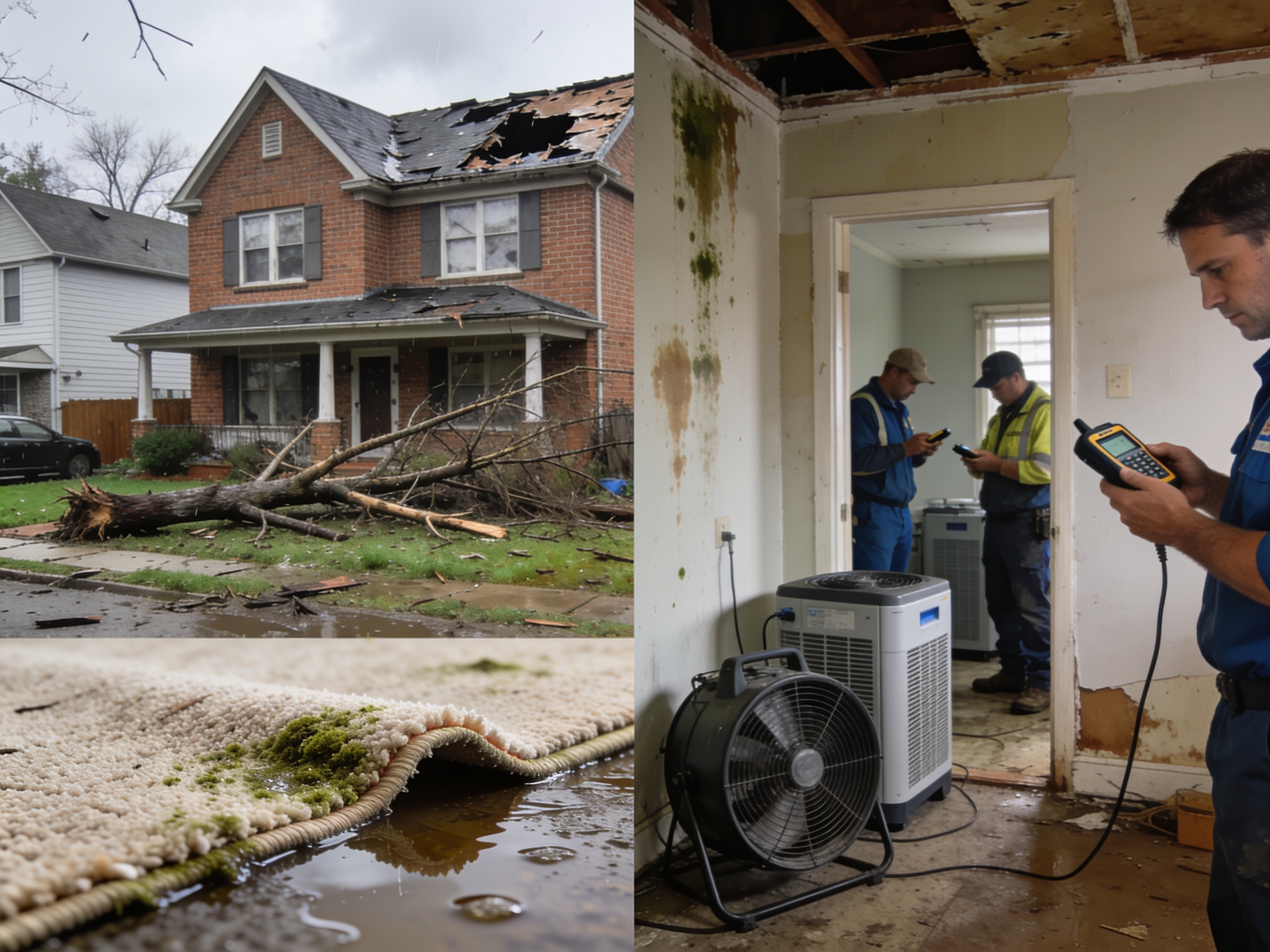
After Louisville storms, water damage restoration costs are driven first by the volume of water that enters a structure, the types of materials it contacts, and how quickly crews can reach affected spaces in neighborhoods such as Downtown, The Highlands, and Germantown. These variables determine drying times, demolition needs, and equipment hours more than any other single factor.
Volume and Duration of Water Intrusion
Storm intensity in Jefferson County often produces sudden heavy rain that overwhelms gutters and foundation drains on older homes. In The Highlands and Clifton, many properties built before 1950 have clay tile or stone foundations that channel water into basements for hours after the rain stops. Longer saturation periods require more dehumidification equipment and repeated moisture readings before Water Damage Restoration can move to reconstruction. Crews working from the 4600 Crums Ln location typically stage portable extractors and air movers the same day because mild winter temperatures still allow mold growth within 48 hours when humidity remains elevated.
Home layouts in Shawnee and Portland add another layer: narrow lots and shared walls limit exterior access, forcing technicians to carry equipment through finished rooms. Each extra day of standing water increases labor and disposal costs because saturated drywall and insulation must be removed in larger sections. Monitoring daily moisture levels with meters prevents unnecessary demolition while ensuring hidden pockets behind lath-and-plaster walls are addressed.
Materials and Structural Realities in Louisville Housing Stock
Many homes in Old Louisville and Butchertown contain plaster on wood lath, heart-pine flooring, and post-and-beam construction. These materials absorb and release moisture differently than modern drywall, extending drying times and sometimes requiring selective removal rather than full gutting. Water Damage Repair on these surfaces often involves drying the structure in place with targeted heaters and fans to preserve original woodwork.
Crescent Hill and St. Matthews properties frequently feature finished basements added decades after the original build. When storm water reaches carpet, underlayment, and lower cabinetry, crews must separate salvageable items from those that must be discarded to avoid cross-contamination. The humid subtropical climate keeps ambient moisture high even after storms pass, so dehumidifiers run longer than they would in drier regions.
Access, Terrain, and Neighborhood-Specific Challenges
Terrain around Cave Hill Cemetery and the Falls of the Ohio creates drainage patterns that direct runoff toward lower-lying blocks in Portland and Shawnee. Narrow alleys and mature tree cover can block truck access, requiring smaller equipment and additional manual labor. In Germantown and Butchertown, tight parking and one-way streets extend response times during peak storm events.
Homeowners in these areas benefit from knowing which streets flood first so they can move valuables before crews arrive. The business at 4600 Crums Ln maintains shorter drive times to these pockets because the shop sits on the west side of Louisville, allowing faster staging of extraction tools when multiple calls arrive simultaneously.
Seasonal Storm Patterns and Related Risks
Jefferson County experiences most severe storms from late spring through early fall, yet occasional winter events still produce ice dams and roof leaks that affect attics in St. Matthews and Crescent Hill. How Louisville Winters Cause Pipe Bursts in Older Homes details how freeze-thaw cycles create hidden leaks that surface only after thawing. Those leaks often travel along joists and appear in ceilings far from the original entry point, increasing the square footage that must be dried and repaired.