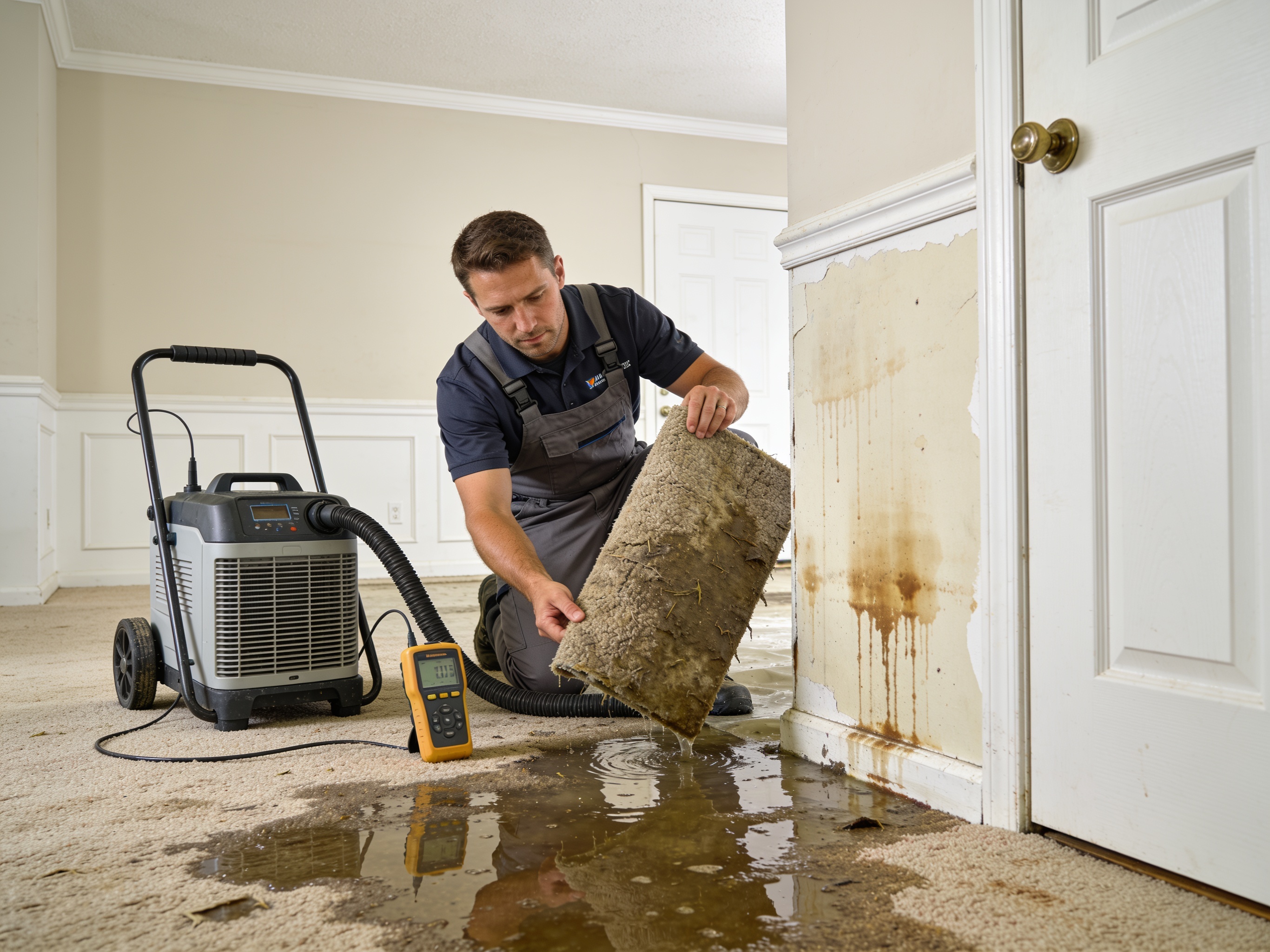
Louisville's humid subtropical climate means water intrusion in older brick and plaster homes common in Old Louisville and Germantown can lead to hidden moisture pockets within days. Crews often encounter lath-and-plaster walls that absorb and release water slowly, requiring extended drying times compared to modern drywall. Properties near the Ohio River or in low-lying sections of Portland and Butchertown face repeated basement seepage after heavy rains, where soil saturation around foundations changes the extraction approach.
In neighborhoods like St. Matthews and Crescent Hill, many homes built before 1950 have crawl spaces with limited access that trap humidity and promote mold growth on joists. Technicians check for compromised subfloors and must account for the mild winters that allow work year-round but also keep ground moisture levels elevated. Equipment placement must consider narrow streets in The Highlands and limited parking around Churchill Downs during event seasons.
Restoration after pipe bursts or appliance leaks in Clifton and Shawnee homes frequently involves selective demolition to reach wet insulation behind exterior walls. Local building practices from earlier eras often used multiple layers of flooring that trap water between surfaces, extending the drying phase. Crews coordinate with Jefferson County inspectors when structural members are affected to ensure repairs meet current codes without unnecessary over-repair.
Falls of the Ohio flooding events can send water into commercial spaces near the waterfront, where concrete slab construction requires different moisture mapping than residential wood-frame buildings. Rapid response prevents secondary damage to hardwood floors found in many historic properties. Documentation of pre-existing conditions is essential when working near Cave Hill Cemetery or in dense blocks of Downtown.
Technician insight
In Louisville the thing that catches most people out with water damage restoration is how quickly humidity in summer turns minor basement seepage into mold on lath-and-plaster in Old Louisville and Germantown homes; the mild winters keep soil around foundations damp longer than owners expect, so drying times stretch when crews hit those layers.
St. Matthews Basement Seepage
Heavy rain pushed water through a cracked foundation wall in a 1940s home. Crews found saturated insulation and wet joists extending under the kitchen. Extraction and targeted drying prevented mold spread into adjacent rooms; final moisture checks confirmed levels safe for reinstallation of base cabinets.
Water Damage Restoration Services We Offer
✓Emergency Water Extraction
Rapid removal of standing water from basements and first floors in Louisville homes to reduce saturation of joists and subfloors.
✓Structural Drying
Targeted use of air movers and dehumidifiers on plaster and lath walls common in Old Louisville and Germantown properties.
✓Basement Flood Cleanup
Handling river-influenced seepage in Portland and Butchertown crawl spaces and basements after heavy Jefferson County rains.
✓Flooring and Subfloor Restoration
Assessment and repair of hardwood and layered flooring systems found in The Highlands and Crescent Hill residences.
✓Mold Containment After Water Damage
Isolation and removal protocols to address rapid mold growth triggered by Louisville's high summer humidity.
Water Damage Restoration Cost in Louisville, KY
| Service | Typical Range | What Affects It |
|---|---|---|
| Initial Assessment | Free | Includes moisture readings at the Louisville property |
| Water Extraction | $600–$2,200 | Varies by volume and access in older homes |
| Equipment Drying (per week) | $800–$1,800 | Influenced by humidity and wall type |
| Flooring Removal And Reset | $1,200–$3,500 | Depends on square footage and subfloor condition |
Ranges are typical for Louisville, KY and confirmed with an exact written quote before any work starts.
How it works
- 1
On-Site Assessment
Technician inspects affected areas in the specific Louisville neighborhood and documents moisture levels in walls, floors and contents.
- 2
Water Extraction
Removal of standing water using pumps and vacuums suited to the property's foundation type and access constraints.
- 3
Drying And Monitoring
Placement of drying equipment with daily moisture readings until materials return to acceptable levels for the local climate.
- 4
Restoration And Repairs
Selective replacement of damaged materials and final cleaning to return the space to pre-loss condition.
Pricing
Upfront quotes after inspection; final cost depends on water volume, affected materials and drying duration.