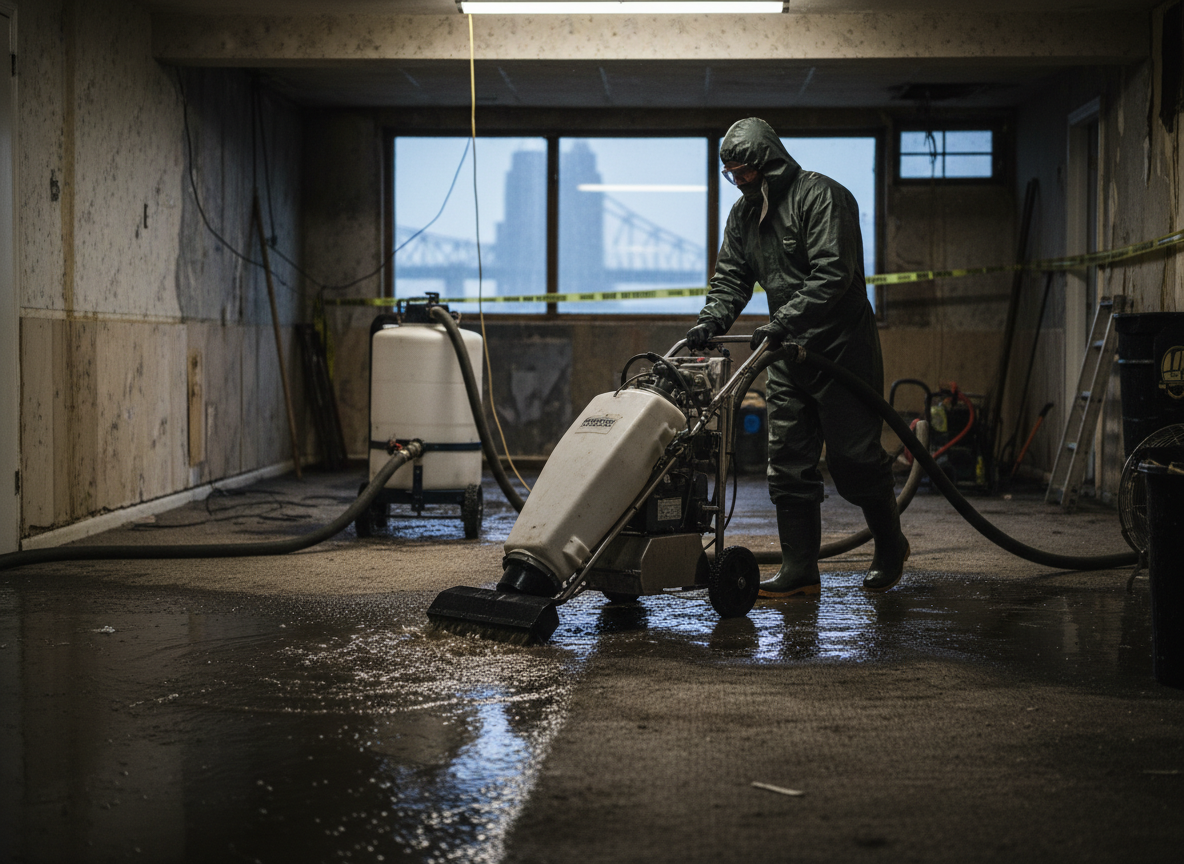
Louisville's humid subtropical climate brings heavy summer storms and occasional Ohio River flooding that hits low-lying spots in Portland, Butchertown, and Shawnee hardest. Older brick and frame homes built before 1950 in Old Louisville and Germantown often have plaster walls and hardwood floors that trap water quickly, so extraction must start within hours to prevent swelling and mold. Crews use truck-mounted pumps and air movers sized for these tight basements and crawl spaces rather than generic residential units.
Jefferson County soil is mostly clay that holds moisture, so even after visible water is gone, hidden saturation under slab foundations in St. Matthews and Crescent Hill can linger for days. Technicians check for hidden pockets behind kitchen cabinets and in HVAC returns because the mild winters do not freeze the ground enough to stop capillary wicking. Skipping these steps turns a one-day removal job into repeated callbacks.
Water from burst supply lines in Clifton or appliance failures in Downtown high-rises moves differently than river or sewer water, requiring separate containment to avoid cross-contamination. Local crews separate clean and gray water streams immediately because Louisville Metro codes limit discharge into storm drains during heavy rain events.
After pumps clear standing water, moisture meters map remaining saturation in joists and subfloors across multi-story homes common in The Highlands. This prevents callbacks when humidity spikes again in late summer.
Technician insight
In Louisville the thing that catches most people out with Emergency Water Removal is how quickly water travels under the hardwood floors in pre-war homes in Old Louisville and Germantown. Clay soil around the Ohio River keeps moisture trapped longer than people expect, so we always pull baseboards on day one even when the floor looks dry.
Highlands Row House After Supply Line Break
A supply line split overnight in a 1920s row house in The Highlands. Water reached the parlor floor and traveled under oak boards into the dining room. We extracted standing water, mapped saturation in the subfloor, and set drying equipment before the weekend humidity spike. The homeowner avoided mold growth and kept the original floors intact.
Emergency Water Removal Services We Offer
✓Basement Flood Extraction
Removes standing water from Jefferson County basements after storms, using submersible pumps suited for clay soil sites that drain slowly.
✓Burst Pipe Water Removal
Extracts water from supply line failures common in pre-1960 homes in Germantown and Old Louisville before it reaches plaster or hardwood.
✓Appliance Leak Cleanup
Handles sudden releases from water heaters or washing machines in Clifton and Crescent Hill kitchens where tight layouts trap water under cabinets.
✓Storm Water Removal
Clears rainwater intrusion through windows and roofs after Louisville's summer thunderstorms, focusing on single-story homes in Shawnee and Portland.
✓Sewage Backup Extraction
Removes contaminated water from sewer backups near older lines in Butchertown and Downtown, with full separation of affected materials.
Emergency Water Removal Cost in Louisville, KY
| Service | Typical Range | What Affects It |
|---|---|---|
| Small area extraction (under 200 sq ft) | $450–$850 | Higher in multi-story homes with limited access like those in The Highlands |
| Basement flood removal | $900–$2,200 | Varies with depth and whether sewage is involved |
| Appliance or pipe leak extraction | $350–$700 | Lower when limited to one room in Clifton or Crescent Hill |
| Equipment rental per day after initial visit | $150–$300 | Needed when drying extends beyond 48 hours due to humidity |
Ranges are typical for Louisville, KY and confirmed with an exact written quote before any work starts.
How it works
- 1
Arrival And Safety Check
Technicians arrive within the service window, shut off water sources, and assess electrical risks in older Louisville homes before starting pumps.
- 2
Standing Water Extraction
Truck-mounted and portable pumps remove visible water from floors and low areas, with separate handling for clean versus contaminated sources.
- 3
Hidden Moisture Mapping
Moisture meters locate saturation in walls, subfloors, and crawl spaces typical of Jefferson County brick and frame construction.
- 4
Initial Drying Setup
Air movers and dehumidifiers sized for local humidity levels begin the drying process before full restoration crews arrive.
Pricing
Pricing depends on water volume, source type, and access in older Louisville homes. Upfront quotes given on site.