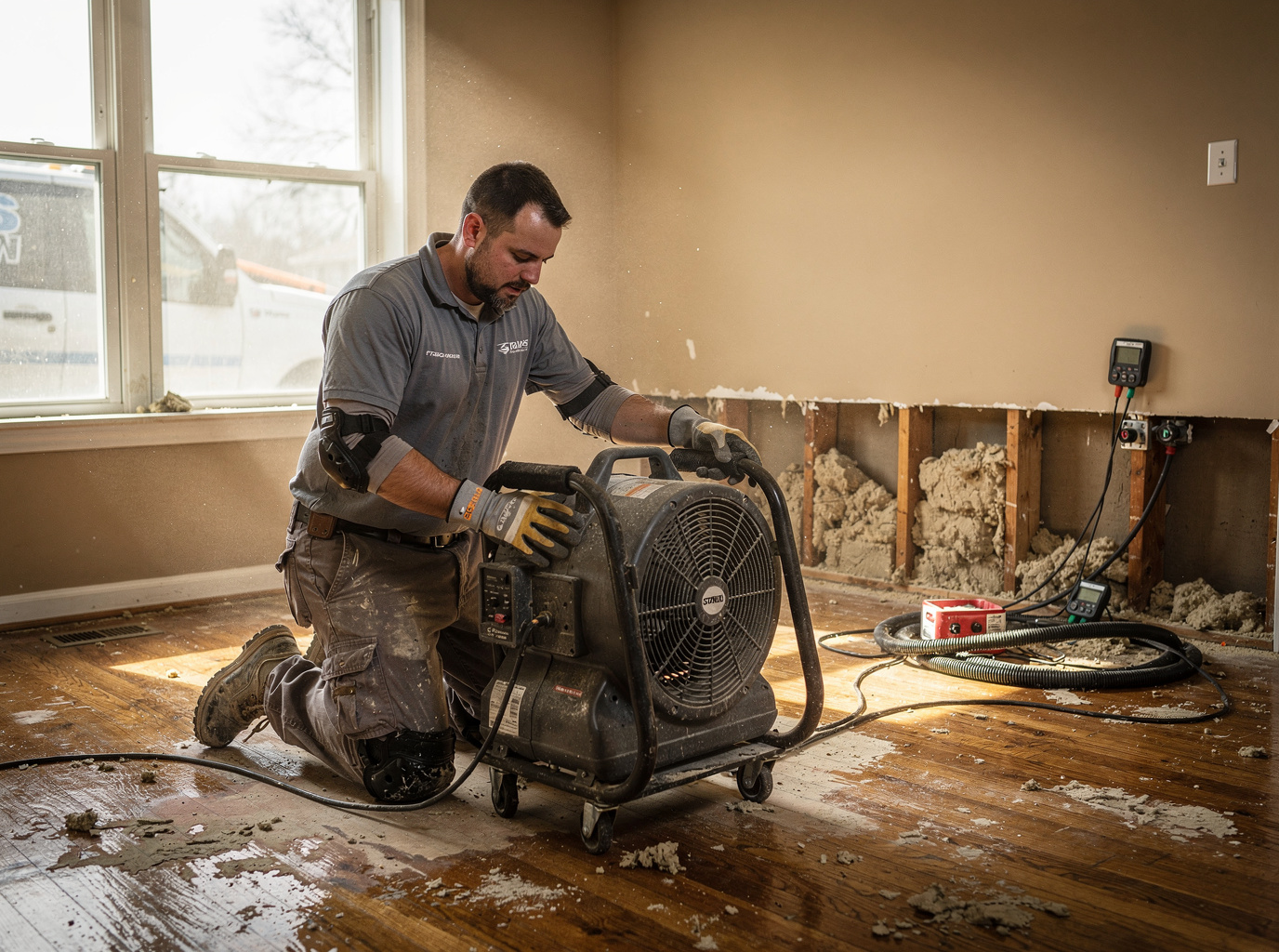
Jeffersontown homeowners facing water damage from summer thunderstorms or pipe failures call on crews that know the suburb's layout. From Tinsley Park east to the Blankenbaker corridor, older ranch homes on slabs and split-levels built in the 1970s often see water migrate under vinyl flooring or into finished basements after heavy rain. Response from the 4600 Crums Ln shop reaches these streets quickly via Hurstbourne Parkway or I-265, letting techs extract water before mold sets in during the humid months.
Local drainage patterns around Jeffersontown Elementary and the surrounding subdivisions mean standing water collects in yards when storm drains back up. Crews familiar with these blocks bring portable pumps sized for the tight side yards and fenced lots common here. They focus on drying the concrete foundations and subfloors that hold moisture longer than newer builds found closer to the Summit shopping area.
Winter freezes followed by quick thaws also hit Jeffersontown's copper and PVC lines hard. When a supply line bursts inside a wall near Veterans Memorial Park, the team isolates the leak, removes saturated drywall, and sets up drying equipment that accounts for the mild but damp Jefferson County winters.
Around 6. Jeffersontown
We regularly work near:
- 📍Tinsley Park
- 📍Jeffersontown High School
- 📍Jeffersontown Elementary School
- 📍Southeast Christian Church
- 📍Blankenbaker Parkway
Water Damage Restoration in 6. Jeffersontown — Local Notes
- •Many 1970s ranch homes sit on clay-heavy soil that drains slowly, so water from roof leaks or overflowing gutters often pools against the foundation for days.
- •Narrow driveways and mature trees in established Jeffersontown subdivisions limit equipment placement, requiring smaller extraction units and extra floor protection.
- •Proximity to the Floyds Fork watershed means properties near the eastern edge can see groundwater rise after prolonged rain, pushing moisture through slab joints.