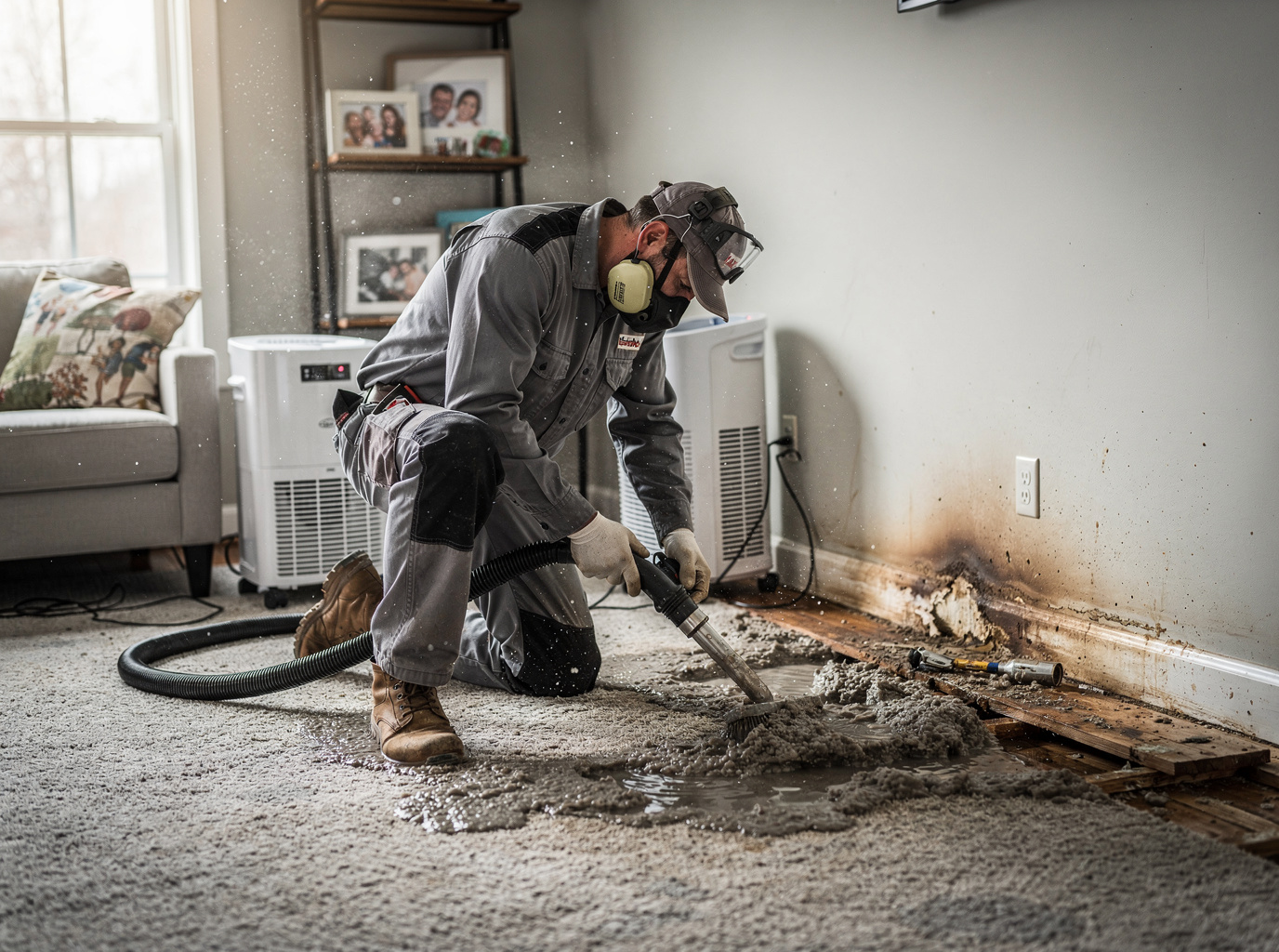
Louisville's mix of pre-1940 brick homes in Old Louisville and Germantown plus post-war builds in St. Matthews means water often travels behind plaster or into balloon-framed walls before homeowners notice. Jefferson County's clay soils and mild winters keep crawl spaces damp, so even small roof leaks near Cave Hill Cemetery or the Ohio River lowlands can saturate insulation and subfloors for weeks. Our crews map moisture with thermal imaging, remove affected materials, and dry to industry standards rather than stopping at visible surfaces.
Hot, humid summers accelerate mold on wet drywall and carpet padding within 48 hours, especially in tightly sealed Highlands bungalows with limited attic ventilation. We extract standing water first, then use commercial air movers and dehumidifiers sized for the square footage and construction type. In Butchertown and Portland row houses, shared walls require checking adjacent units so moisture does not migrate and create secondary claims.
After drying we replace damaged sections with like materials, matching original plaster or hardwood where possible. Upfront quotes cover labor, equipment, and disposal; any hidden damage found during demolition is documented with photos before additional work begins. We serve calls from Downtown to Shawnee and out to Elizabethtown and Lexington when customers need coordinated regional service.
Technician insight
In Louisville the thing that catches most people out with water damage repair is how fast mold takes hold in our humid summers once moisture reaches the plaster or balloon framing of 1920s homes in Old Louisville or Germantown; skipping cavity drying almost always leads to callbacks two weeks later.
Hidden Leak in Highlands Bungalow
A homeowner noticed ceiling stains after heavy rain. Inspection found water had traveled along joists into two rooms. We extracted from the attic space, dried the cavities for four days, and replaced damaged plaster and insulation. The home passed final moisture checks with no mold growth.
Water Damage Repair Services We Offer
✓Basement Water Extraction
Remove standing water from Louisville basements using submersible pumps and wet vacs sized for clay-soil flooding common near the Falls of the Ohio.
✓Wall and Ceiling Cavity Drying
Inject drying air into plaster and lath walls of older Jefferson County homes to reach trapped moisture without full demolition.
✓Carpet and Pad Removal
Lift and dispose of water-soaked carpet and padding in humid summers before mold sets in, then reinstall or replace with matching materials.
✓Sewage Backup Cleanup
Handle contaminated water from backups in Portland and Shawnee properties, including disinfection and proper disposal per local health guidelines.
✓Appliance Leak Containment
Isolate and repair water damage from washing machines or water heaters in Clifton and Crescent Hill kitchens where older plumbing is common.
Water Damage Repair Cost in Louisville, KY
| Service | Typical Range | What Affects It |
|---|---|---|
| Water Extraction | $350–$900 | Varies by gallons removed and access in multi-story homes |
| Equipment Drying (per day) | $150–$400 | Number of air movers and dehumidifiers required |
| Drywall And Insulation Removal | $400–$1,200 | Linear feet and height of affected walls |
| Carpet And Pad Disposal | $200–$600 | Room size and whether subfloor needs treatment |
Ranges are typical for Louisville, KY and confirmed with an exact written quote before any work starts.
How it works
- 1
On-Site Assessment
Inspect affected rooms, use moisture meters on walls and floors, and document scope for homes in neighborhoods like Germantown or The Highlands.
- 2
Water Removal
Extract standing water with pumps and vacuums, protecting salvageable hardwood in older Louisville properties.
- 3
Structural Drying
Place air movers and dehumidifiers, monitoring daily until drywall and subfloors reach safe moisture levels.
- 4
Repair And Restoration
Replace damaged materials and restore surfaces to pre-loss condition with matching finishes.
Pricing
Upfront written quotes after inspection; final price depends on water volume, affected square footage, and hidden damage discovered during drying.