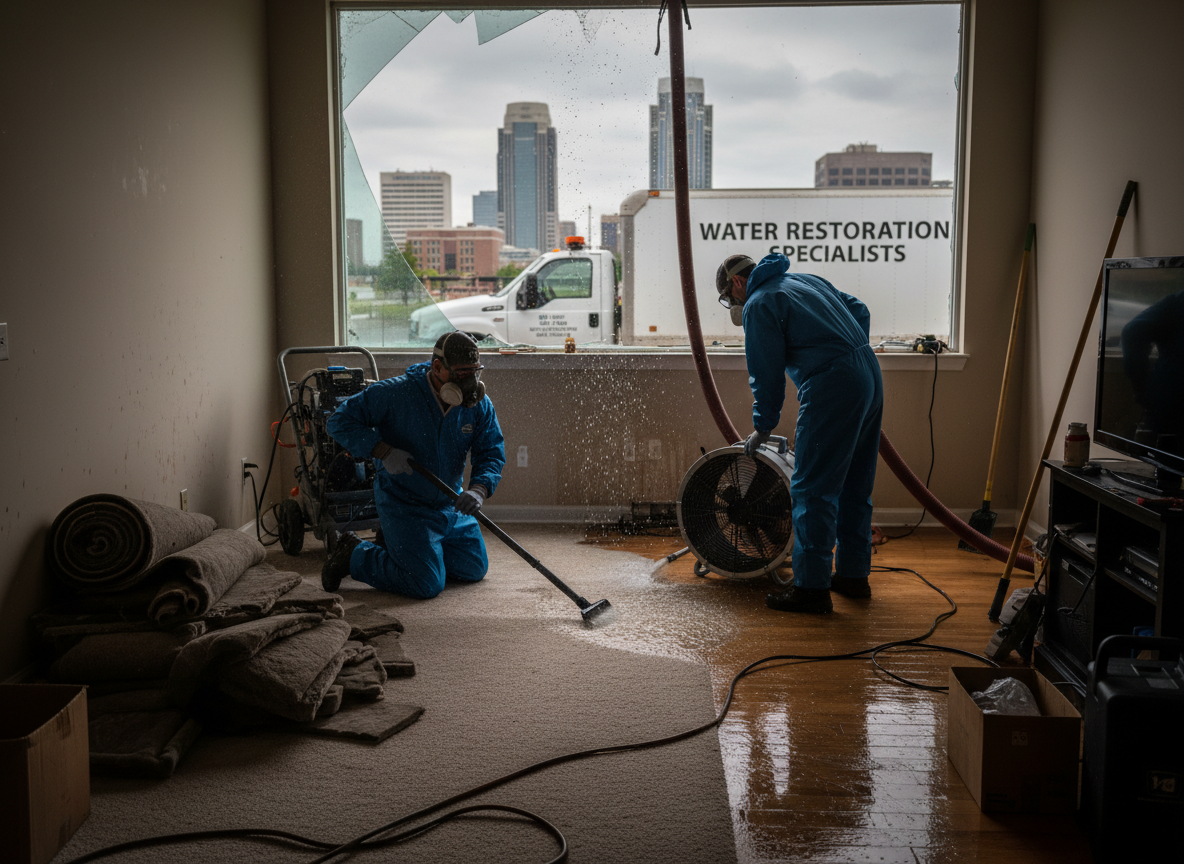
Louisville's humid subtropical climate brings sudden summer downpours and occasional winter freezes that crack older pipes in homes built before 1950. In neighborhoods like Old Louisville and Germantown, plaster-and-lath walls hold moisture longer than modern drywall, so extraction must reach behind baseboards and into cavities before hidden mold starts in the high humidity. Crews familiar with these houses use moisture meters on brick foundations common in Butchertown and Clifton to map water migration along shared walls.
Jefferson County terrain slopes toward the Ohio River, so properties near the Falls of the Ohio or Louisville Waterfront Park see groundwater intrusion after heavy rain. In St. Matthews and Crescent Hill, slab-on-grade homes from the 1960s often push water under vinyl flooring or into HVAC returns. Technicians isolate electrical before beginning removal and document every step for insurance adjusters who handle claims from Lexington and Elizabethtown commuters.
Drying times stretch in July when dew points stay above 70 degrees, requiring industrial dehumidifiers sized for the square footage rather than quick box fans. In Portland and Shawnee, older balloon-frame construction lets water travel vertically between floors, so ceiling cuts and wall drying often happen together. Homeowners who skip professional drying see warped hardwood floors return weeks later once the humidity drops.
Technician insight
In Louisville the thing that catches most people out with Emergency Water Damage Restoration is how quickly water travels through the balloon framing in pre-1950 homes in Germantown and Old Louisville; one burst pipe on the second floor can soak plaster three rooms away before anyone notices.
Crescent Hill Slab Leak
A homeowner in Crescent Hill noticed buckling hardwood after a mild winter freeze. We traced the leak to a 1960s copper line under the slab, extracted water from two rooms, and ran drying equipment for four days until meter readings dropped below 12 percent. The floors were saved without full replacement.
Emergency Water Damage Restoration Services We Offer
✓Basement Flood Extraction
Remove standing water from Louisville basements after storms or pipe bursts using truck-mounted pumps and air movers suited to Jefferson County humidity.
✓Ceiling and Wall Cavity Drying
Locate and dry moisture trapped behind plaster in historic homes across Germantown and Old Louisville with targeted demolition and commercial dehumidifiers.
✓Hardwood Floor Water Removal
Lift and dry or replace water-damaged hardwood in Crescent Hill and St. Matthews homes where humidity prevents natural drying.
✓Slab Leak Detection and Repair
Find and stop under-slab leaks common in 1960s homes near Churchill Downs before water migrates into finished living spaces.
✓Sewage Backup Cleanup
Handle contaminated water from backups in older Portland and Shawnee properties with full containment and EPA-registered disinfectants.
Emergency Water Damage Restoration Cost in Louisville, KY
| Service | Typical Range | What Affects It |
|---|---|---|
| Initial Assessment | Free | Includes moisture mapping and written scope |
| Water Extraction | $600–$1,800 | Varies by gallons removed and access difficulty |
| Equipment Drying (per day) | $250–$450 | Number of days driven by humidity and material type |
| Plaster Wall Drying | $400–$1,200 | Extra when historic lath requires multiple cuts |
Ranges are typical for Louisville, KY and confirmed with an exact written quote before any work starts.
How it works
- 1
Arrival And Safety Check
Technician arrives within two hours, shuts off water sources, and isolates electrical hazards in the affected Louisville property.
- 2
Water Extraction
Remove standing water with pumps sized for the volume, then extract from carpets, pads, and subfloors.
- 3
Moisture Mapping
Use meters and infrared cameras to chart hidden moisture in walls, ceilings, and slabs common to Jefferson County construction.
- 4
Drying And Monitoring
Set up dehumidifiers and air movers, then return daily to adjust equipment until readings reach safe levels.
- 5
Final Documentation
Provide photos, moisture logs, and a report for insurance claims before releasing the space.
Pricing
Most jobs start with a free assessment; final cost depends on water volume, affected square footage, and how many days of drying equipment are required.