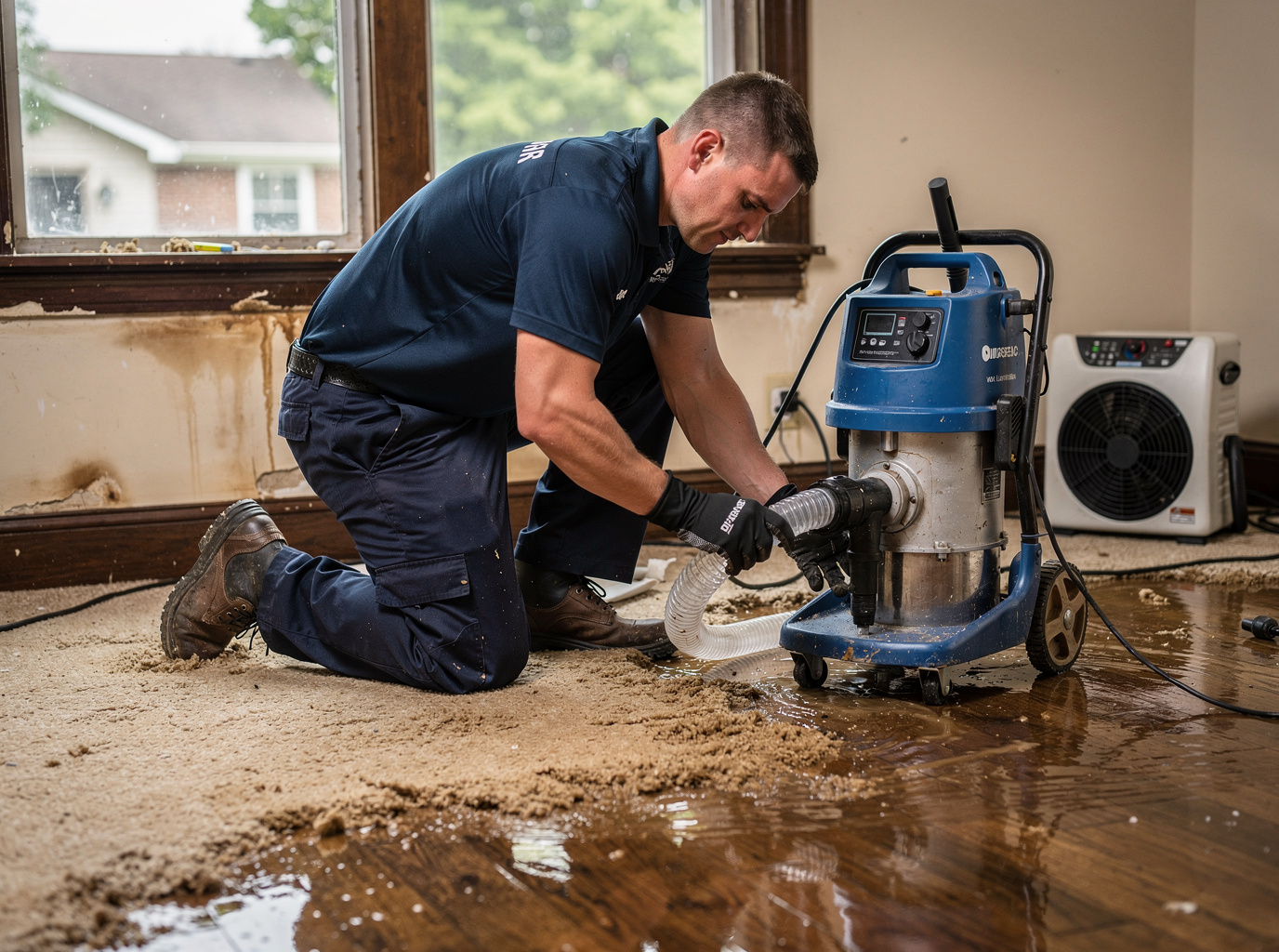
Louisville's humid subtropical climate brings heavy summer storms that quickly saturate older brick and frame homes in neighborhoods like Old Louisville and The Highlands. Water migrates through limestone foundations and into plaster walls, creating hidden pockets that standard fans miss. Crews must pull baseboards and use moisture meters on lath-and-plaster to locate saturation before mold sets in within 48 hours.
Jefferson County properties near the Ohio River in Portland and Shawnee face repeated groundwater intrusion during mild winter rains. Slab-on-grade homes in St. Matthews and Crescent Hill often trap water under vinyl or hardwood, requiring targeted removal of subfloor sections. Technicians document affected materials for insurance while avoiding unnecessary demolition in historic Butchertown structures.
After extraction, industrial dehumidifiers run continuously because Louisville humidity rarely drops below 60 percent even in cooler months. Technicians monitor drywall moisture daily and separate wet insulation from cavity walls in Clifton bungalows to prevent hidden decay. Proper airflow direction around load-bearing beams keeps structural drying times under five days when started promptly.
Jobs near the Falls of the Ohio or Louisville Waterfront Park often involve silt-laden water that leaves fine sediment in HVAC returns and behind cabinets. Restoration includes flushing lines and replacing affected duct insulation to stop musty odors from traveling through the home.
Technician insight
In Louisville the thing that catches most people out with water damage restoration is how quickly humidity in the Ohio River valley pushes mold into lath-and-plaster walls of 1920s homes in Old Louisville and The Highlands. Homeowners often run box fans too early and spread spores before we can map the moisture.
Crescent Hill Slab Leak
A homeowner in Crescent Hill noticed buckling hardwood after a slab leak. We found water had traveled under the slab into two adjacent rooms. Extraction and targeted drying under the subfloor prevented mold while preserving the original oak.
Water Damage Restoration Service Services We Offer
✓Emergency Water Extraction
Rapid removal of standing water from basements and first floors in Downtown and Germantown homes before it reaches joists or electrical systems.
✓Structural Drying for Historic Homes
Targeted drying of plaster walls and hardwood floors in Old Louisville and Butchertown properties using low-grain dehumidifiers to protect original materials.
✓Basement Water Damage Repair
Extraction and drying of finished basements in The Highlands and Clifton after sump failures or heavy rain, followed by restoration of drywall and flooring.
✓Post-Storm Flood Restoration
Cleanup and drying after summer thunderstorms or river overflow affecting Shawnee and Portland neighborhoods, including sediment removal and odor control.
✓Moisture Mapping and Documentation
Detailed meter readings and photo logs for insurance claims on properties in St. Matthews and Crescent Hill to identify every wet cavity.
Water Damage Restoration Service Cost in Louisville, KY
| Service | Typical Range | What Affects It |
|---|---|---|
| Water Extraction Visit | $350–$850 | Higher in multi-story homes or when silt from river flooding is present. |
| Full Structural Drying | $800–$2,200 | Depends on number of rooms and whether plaster walls must be opened in older Louisville stock. |
| Moisture Mapping Report | $150–$300 | Required for insurance claims on properties in The Highlands or Germantown. |
| Basement Drying Add-On | $400–$900 | Common after heavy rains near Shawnee or Portland. |
Ranges are typical for Louisville, KY and confirmed with an exact written quote before any work starts.
How it works
- 1
Arrival and Safety Check
Technicians arrive from the 4600 Crums Ln location, shut off power where needed, and assess structural stability in the affected Jefferson County home.
- 2
Water Extraction
Standing water is pumped out using truck-mounted equipment suited for Louisville's clay-heavy soil and older plumbing layouts.
- 3
Drying and Monitoring
Air movers and dehumidifiers are placed; daily moisture readings track progress through plaster and subfloors typical in local neighborhoods.
- 4
Sanitizing and Restoration
Affected materials are cleaned or removed, then the space is prepared for repairs while preventing secondary mold growth in humid conditions.
Pricing
Pricing varies by water volume, affected square footage, and whether historic materials require extra care.