2026-11-09 · Tom Whitaker
Preventing Mold Growth After Summer Humidity Spikes in Louisville Basements
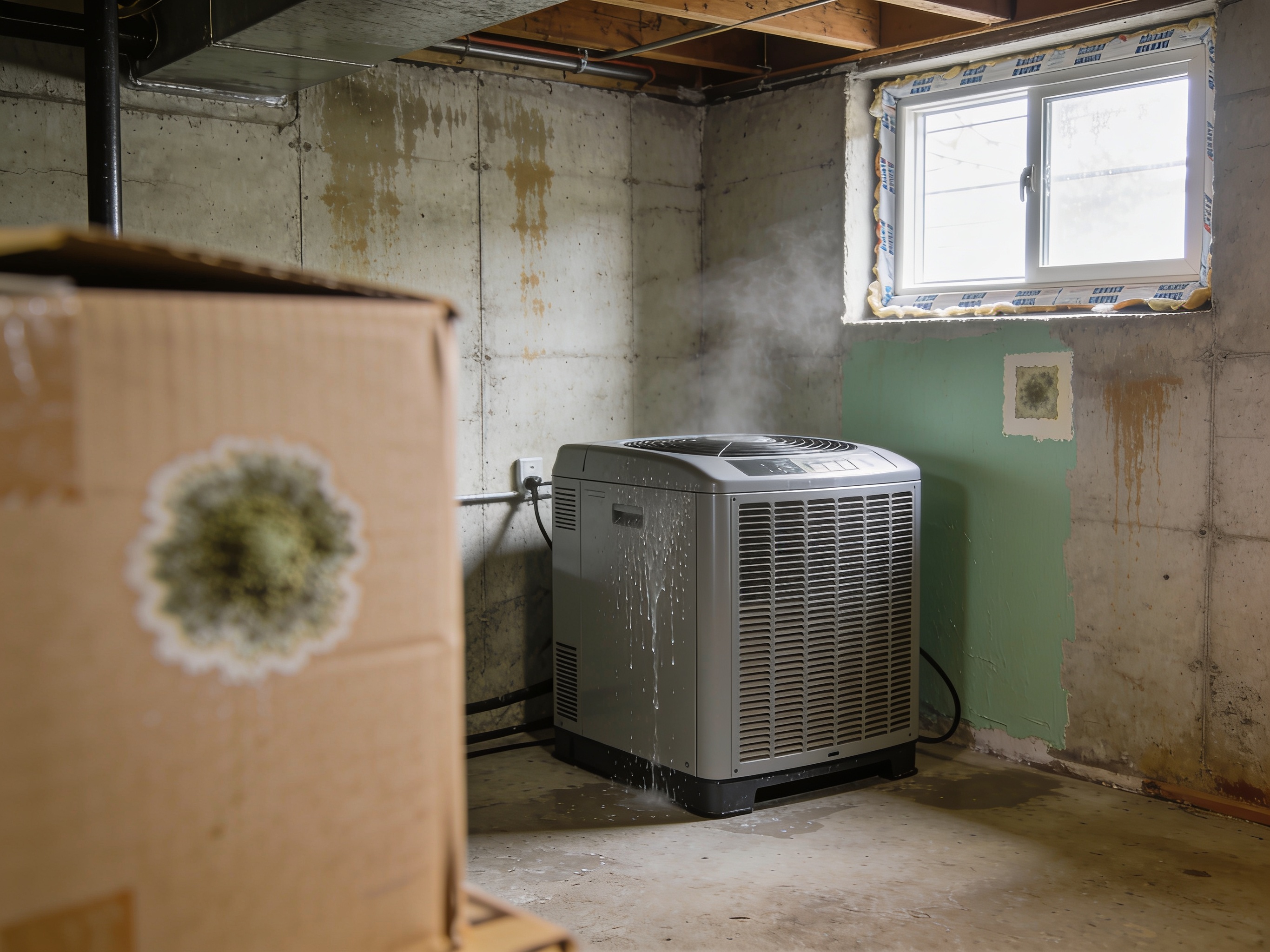
Holding indoor humidity under 50 percent with a properly sized dehumidifier and sealing foundation cracks stops mold from taking hold in Louisville basements after summer humidity spikes. Jefferson County homes built before 1960 in neighborhoods such as Old Louisville, Germantown, and The Highlands often sit on clay soils that hold water against foundations, while the nearby Ohio River and Falls of the Ohio add ambient moisture during July and August heat.
How Louisville's Climate Drives Basement Moisture
Louisville's humid subtropical climate brings hot, sticky summers that push outdoor relative humidity above 70 percent for weeks at a time. When that air cools against basement walls in older brick and stone homes common in Clifton and Butchertown, condensation forms on cool surfaces. Mild winters do little to dry the ground, so moisture lingers into fall. Homeowners in Shawnee and Portland near the river see this effect sooner because the water table stays higher. Without intervention, spores settle on drywall or stored items and begin growing once surface moisture exceeds 60 percent for more than a day or two.
Identifying Hidden Moisture Sources in Local Homes
Many basements in Crescent Hill and St. Matthews have original clay tile drains that crack or clog after decades of sediment buildup from Jefferson County soils. Downspouts that empty too close to foundations or missing gutter extensions allow roof runoff to pool against walls. Even small leaks from upstairs plumbing can travel through floor joists and drip unseen. Checking for musty odors after heavy August rains, feeling for damp spots on concrete, and watching for white efflorescence on walls reveals problems early. These conditions differ from newer subdivisions farther from the river, where better grading reduces risk.
Practical Steps to Keep Humidity in Check
Run a 50-70 pint dehumidifier continuously from June through September and empty or drain it daily. Install a sealed vapor barrier on dirt floors and insulate rim joists with rigid foam to cut condensation. Grade soil so it slopes away from the house at least six inches over the first ten feet. Clean gutters in early summer and again after leaf fall, then extend downspouts at least five feet from the foundation. In homes with finished basements, place a digital hygrometer in the lowest corner and aim to stay between 45 and 50 percent relative humidity. These habits address the specific moisture load created by Louisville's long, humid summers rather than generic advice.
When Professional Water Damage Restoration Becomes Necessary
If standing water appears after a storm or humidity stays above 60 percent despite dehumidifiers, call for extraction and drying before mold colonies expand. Water Damage Restoration crews use industrial air movers and moisture meters to pull water from joists and subfloors that household equipment cannot reach. When the issue traces to repeated seepage rather than a one-time event, Water Damage Repair teams can install French drains or sump systems sized for local clay soils. Acting within the first 48 hours keeps the job smaller and prevents spores from spreading to living areas upstairs.
Monitoring and Seasonal Maintenance for Long-Term Results
Check the dehumidifier filter monthly and replace it when airflow drops. Re-inspect the vapor barrier each spring for tears or pooling. In older neighborhoods like Downtown and Portland, schedule a yearly look at the exterior grading after winter freeze-thaw cycles shift soil. Keep an eye on nearby cities such as Elizabethtown and Lexington that share similar river valley humidity patterns; the same steps apply there. Consistent attention through the hot months prevents the need for larger interventions later and protects the structure of homes built on Louisville's challenging terrain.